Mauritian food is at its best sold from a cart for the price of a coffee. Port Louis is where that is most concentrated, and the whole thing runs on a schedule most visitors miss: the best stalls sell out before lunch.
Start with dholl puri
If you eat one thing in Mauritius, eat this. Two soft flatbreads made with ground split peas, filled with gros pois curry, a spoon of rougaille and as much chilli as you ask for, then rolled and handed over in paper. It costs roughly 25 to 40 rupees for two, and it is the single best value meal on the island.
It is also the one most bound by time. The well-regarded vendors make a fixed quantity and stop when it is gone, which is usually late morning. Turning up at two in the afternoon and finding nothing is not bad luck, it is the normal state of affairs.
The rest of the list
- Gateaux piments — split pea and chilli fritters, sold by the handful in a paper bag, around 20 rupees for five or six. The default street snack.
- Farata — flaky flatbread, usually eaten with a curry or a chutney.
- Mine frite — fried noodles, the workday lunch of central Port Louis.
- Boulettes — steamed dumplings in broth, Sino-Mauritian and excellent in cool weather.
- Alouda — milk, basil seed and agar jelly, served cold. Closer to a dessert than a drink and a good antidote to too much chilli.
Where to stand
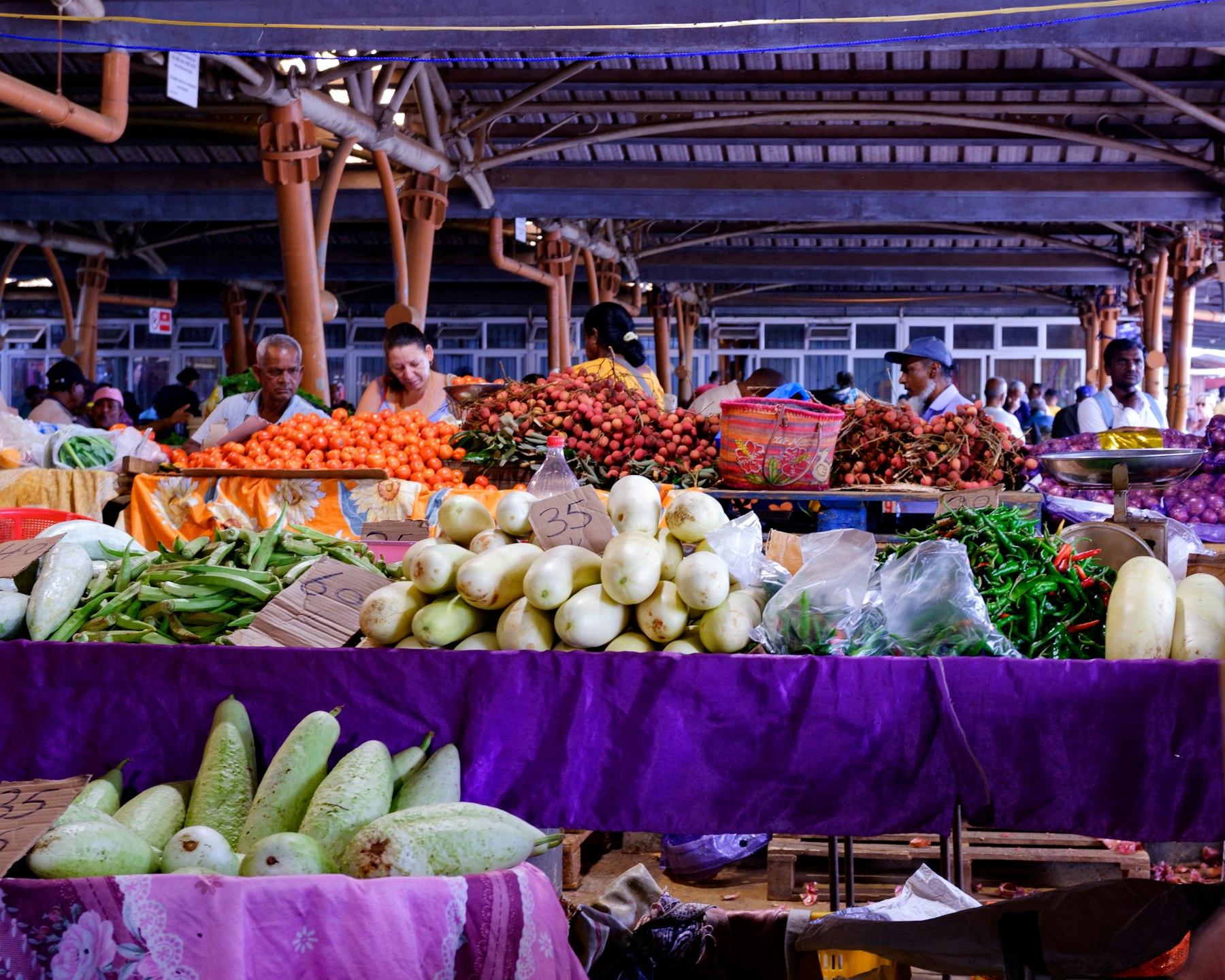
The Central Market is the obvious anchor. The stalls immediately outside the main hall, rather than inside it, are where the dholl puri, rotis and alouda are. Go in the morning, when the produce halls are still working and the food carts are at their busiest.
Rue La Corderie and Desforges Street fill with carts around lunchtime, serving office workers rather than visitors. Queues there are a reliable signal: the stall with the local queue is the stall to join.
Practical rules
- Cash only, in small notes. No vendor will change a 2000 rupee note at eight in the morning.
- Go in the morning. By mid afternoon the produce halls wind down and only the souvenir floor is busy.
- Follow the queue. Turnover is what keeps street food good, and the busiest cart has the freshest.
- Say how much chilli you want before it is assembled, not after.
On eating safely
Street food in Port Louis is cooked to order in front of you and turns over fast, which is exactly what you want. The usual sense applies: eat what is hot and freshly made, be more careful with anything that has been sitting out, and drink bottled or filtered water.
What this costs in a day
A serious morning of eating — dholl puri, a bag of gateaux piments, an alouda and a plate of mine frite — comes to well under 200 rupees a head. The same money buys a single starter in a resort restaurant, and the street version is better food.