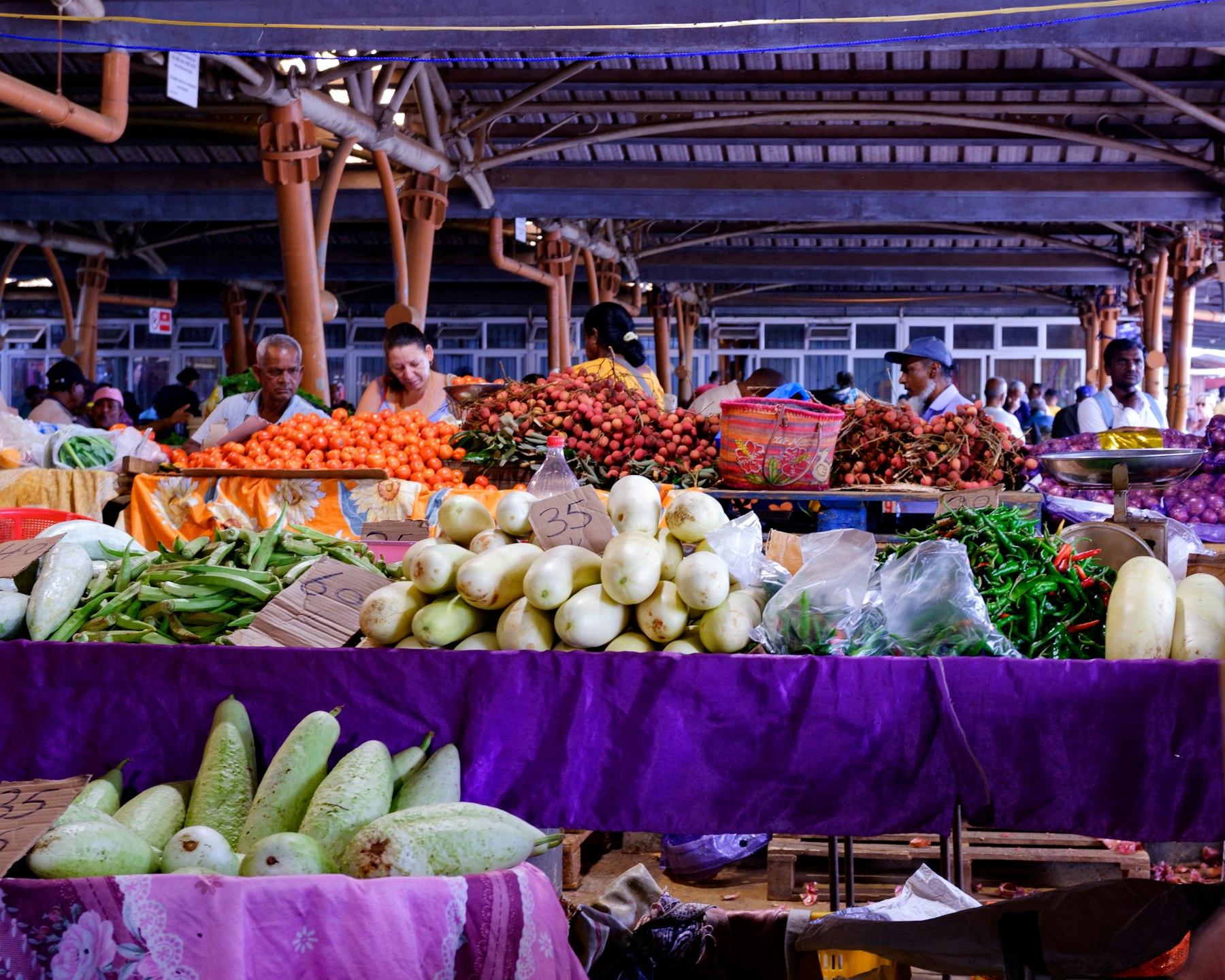
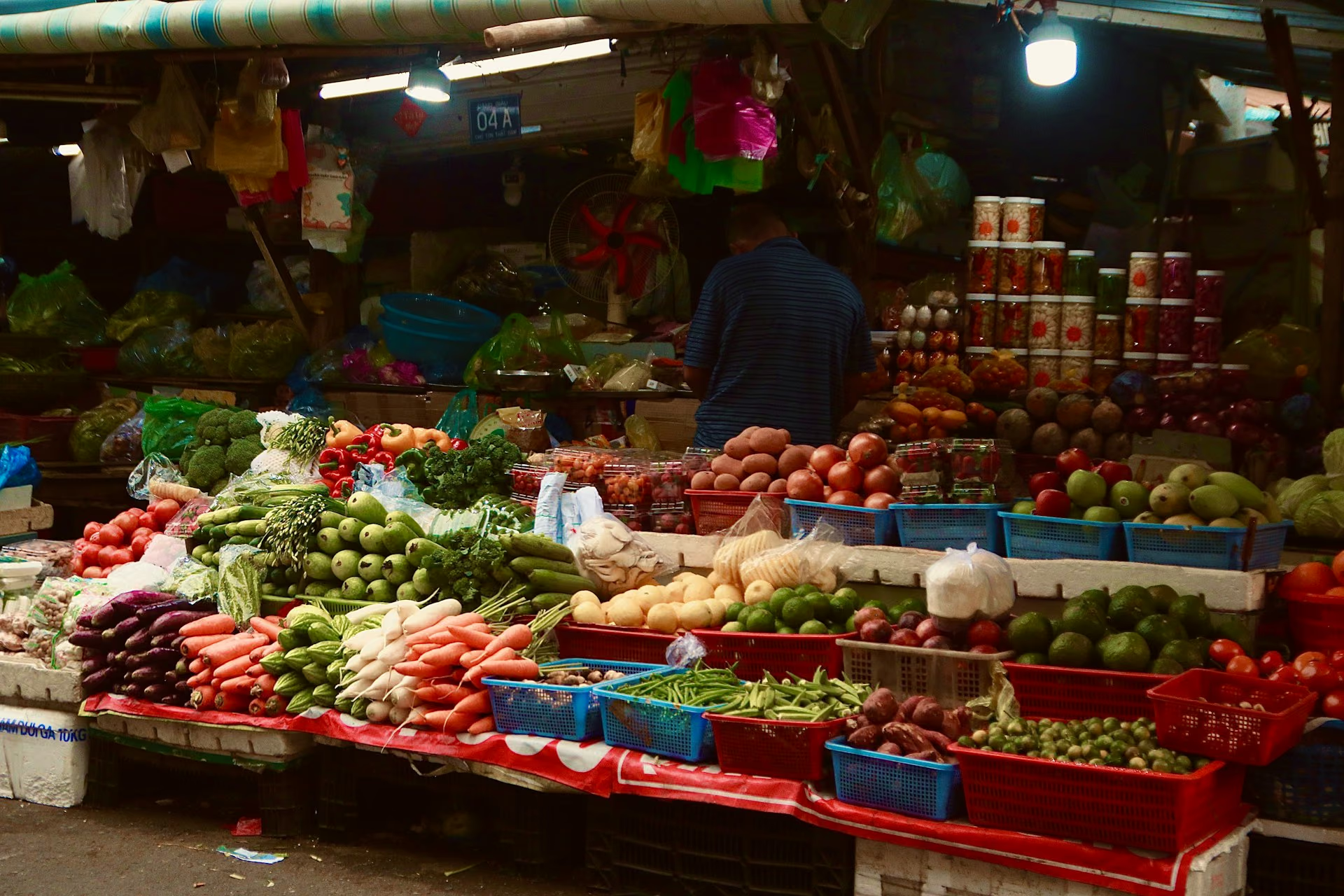
Port Louis has two main covered markets: the Central Market (Marche Centrale) in the heart of the city, and the Bayside Market by the harbour. Both are working markets, not tourist attractions. They are loud, crowded, and the place to see what actually gets eaten on the island.
The Central Market
The Central Market sits on Sir William Newton Street and opens at five in the morning. Serious buyers come then. By nine, the morning rush is over; by noon, the best of the fresh produce is gone. If you are eating breakfast nearby, go after. If you want to buy something to cook, go early.
The market handles produce, fish, and spices. The produce section is straightforward - litchis, mangoes, bananas, whatever is in season. More interesting is the spice section, where you can buy fresh turmeric root, fenugreek leaves, whole nutmeg and what the vendors actually use. Prices are low, and a vendor will tell you how much of a root you need for a curry if you ask.
The fish is the main reason to come early. The seafood section takes up a whole side of the market, and what sells out by noon is the fresh catch - barracuda, snapper, trevally, king mackerel. By mid-morning, you are into fish that was caught yesterday.
The Bayside Market
The Bayside Market, also called the Marche aux Poissons (fish market), is smaller and more focused. It sits right on the waterfront and specialises in seafood - fresh from the boats that dock there. The action is early: fishermen offload the night's catch in the pre-dawn hours, and the market is quietest by mid-morning.
This is the place to see what comes in from the south and east coasts. The variety of fish is wider and fresher than the Central Market, but it is also louder, wetter, and more of an acquired taste if you have not been around working fishing ports before.
How to behave
Haggling is normal, but only if you are buying quantity or know what you are doing. A visitor buying one curry's worth of fish or a small bunch of coriander will not impress a vendor by negotiating down by five rupees. They will impress them more by knowing what they want and not wasting time.
Bring cash. Small notes help. Vendors do take cards but the market moves on cash time, not card time.
Mornings are hectic and not for everyone. If you would rather see the market without getting elbowed, go after nine. You will not get the best pick of fish, but you will see how it actually functions and you will not have to fight for space.
What you came for: spices and ingredients
If you are self-catering, the markets are where Mauritian cooking costs almost nothing. A bundle of fresh coriander is a handful of rupees. Fenugreek, mustard seed, cumin, and fresh turmeric are sold by vendors who know exactly how to prepare them, and a conversation with any spice seller will teach you more about what goes into local food than reading about it will.
The markets are also where you buy the basics if you are staying somewhere with kitchen access: rice, lentils, flour, and the curry leaves that make Mauritian food actually taste like itself.